Professional Surface Dressing Services Across Surrey
SL Surfacing provides professional surface dressing, tar and chip and road surfacing services throughout Surrey for residential, commercial and rural properties. Our work includes private roads, driveways, access lanes, estate roads, farm routes, car parks and other suitable hard-surfaced areas.
With more than 25 years of surfacing experience, our team can assess an existing surface and recommend a practical solution based on its condition, how the area is used and the type of finish required. Surface dressing can be an excellent way to renew a worn surface without automatically resorting to complete reconstruction, provided that the underlying road or driveway remains suitable.
From smaller residential projects to longer private roads and commercial access routes, the aim is the same: careful preparation, an appropriate surfacing specification and a durable finished surface capable of standing up to regular use.
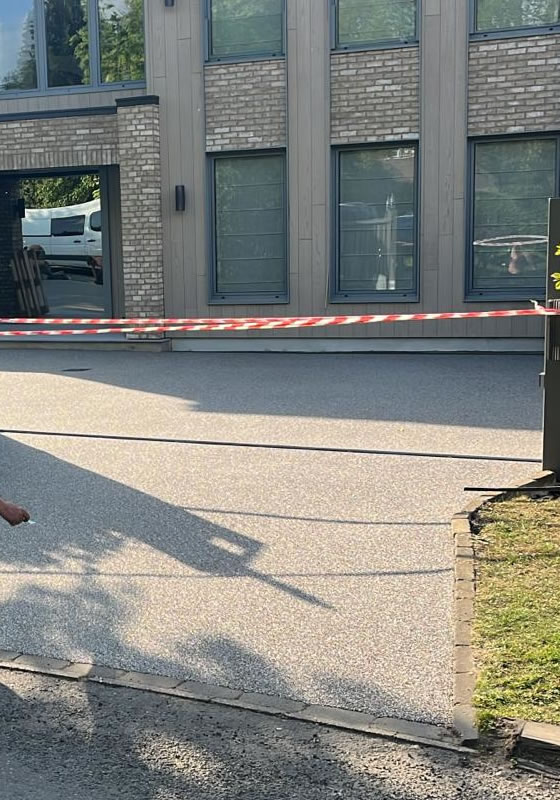
In addition to surface dressing, SL Surfacing undertakes tarmac driveways, asphalt surfacing, private roads, car parks, pothole repairs, resurfacing, block paving and associated surfacing work. This means we are not limited to recommending one treatment where another form of repair or resurfacing would provide a better result.
Call 07309 639449 to discuss your driveway, road or surfacing project and arrange a quotation or site survey.
Call 07309 639449What Is Surface Dressing?
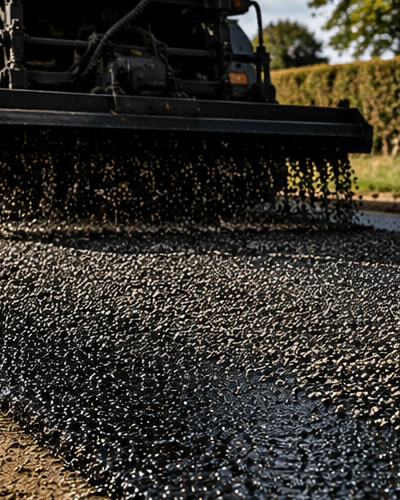
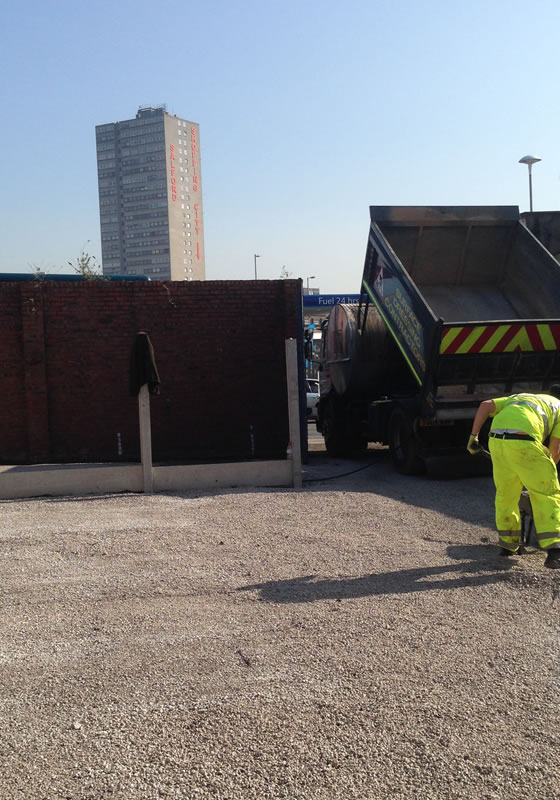
Surface dressing is a method of renewing and protecting an existing road or driveway using a bituminous binder and selected aggregate chippings. The binder is applied evenly across the prepared surface before stone chippings are spread and consolidated to form the new running surface.
You may also hear this type of work described as tar and chip, spray and chip or chip and seal. The terminology can vary, but the principle is similar: the existing base is retained where appropriate and a new bonded aggregate finish is created above it.
Preparation remains extremely important. Potholes, failed edges, depressions or damaged sections may need repair before dressing begins. Simply covering a structurally failed surface will not correct problems underneath, which is why an assessment of the existing road or driveway should form part of the quotation.
Where Surface Dressing Works Best
Surface dressing is particularly useful where an existing road, driveway or access route remains fundamentally sound but its upper surface has become worn, weathered or unattractive. Suitability depends on the condition of the existing construction, drainage, traffic and the amount of repair required beforehand.
Private Roads
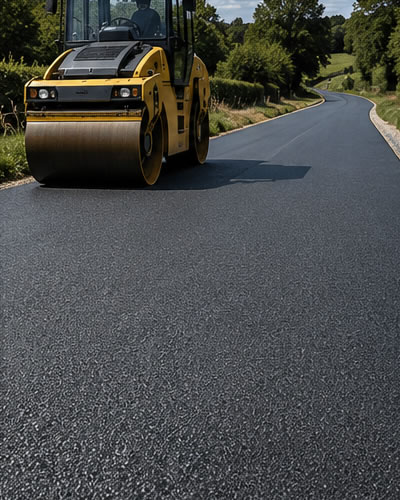
Shared access roads, private lanes and estate roads can often be renewed efficiently without completely replacing an otherwise serviceable base.
Driveways
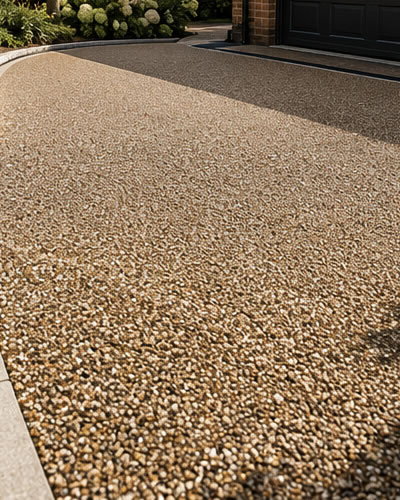
Suitable existing driveways can be refreshed with an attractive aggregate finish while improving grip and protecting the surface below.
Farm Access
Rural roads, tracks and access routes frequently benefit from a robust surface capable of dealing with regular vehicle movement.
Private Estates
Surface dressing can provide a consistent finish across longer estate roads, entrance drives and connecting access routes.
Commercial Access
Depending on traffic levels and the existing construction, it may be suitable for business access roads, yards and service areas.
Parking Areas
Some existing parking and turning areas can also be dressed where the underlying structure is suitable for the intended use.
Why Choose Surface Dressing?
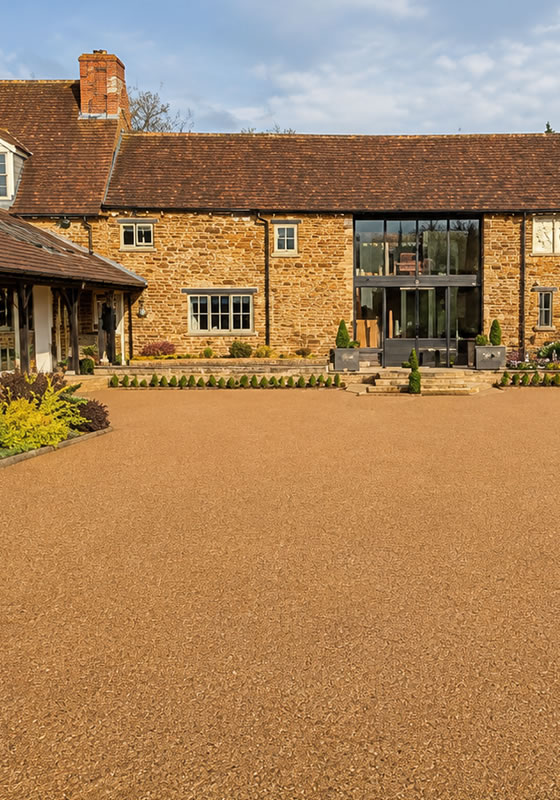
Where the existing base remains suitable, surface dressing can extend the useful life of a road or driveway and improve its appearance without unnecessary full-depth replacement. The bonded stone finish provides useful texture and grip while helping to protect the surface below from further weathering.
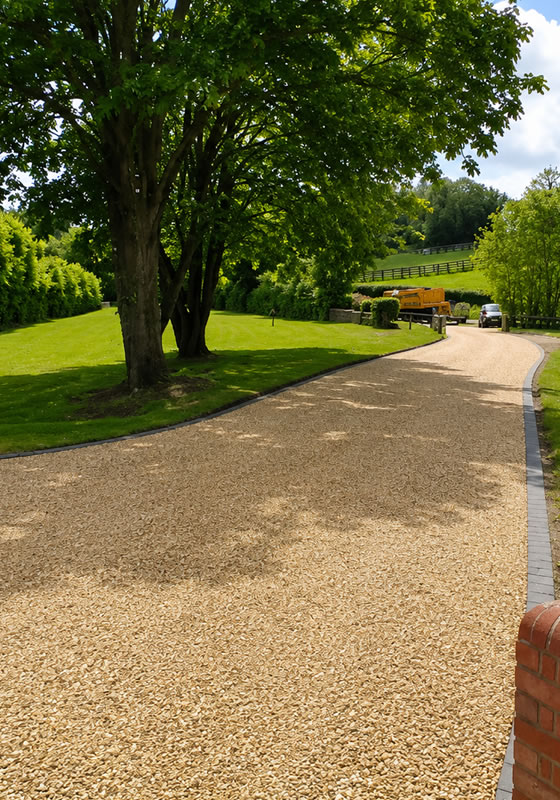
It can also be particularly attractive on rural properties, private estates and longer access roads where a more natural aggregate appearance is preferred to a completely uniform black surface.
The most economical treatment is not always the one with the lowest initial price. A proper assessment should consider the existing construction and any repairs required first, so that money is not spent placing a new finish over underlying defects that need more substantial attention.
Surface Dressing vs Tarmac Resurfacing
Customers often ask whether they need surface dressing or a completely new tarmac surface. They are different solutions and the correct choice depends more on the condition of the existing construction than appearance alone.
Surface Dressing
Surface dressing is normally considered where the underlying road or driveway remains structurally serviceable. Localised defects can be repaired before a binder and selected aggregate are applied over the existing surface.
It is particularly useful for renewing larger areas such as private roads, estate drives and rural access routes where complete reconstruction may not be necessary.
Tarmac & Asphalt
Tarmac or asphalt resurfacing may be more suitable where there is significant deterioration, deformation or widespread surface failure. Depending on the site, damaged areas can be repaired or existing material removed before a new surface course is installed.
SL Surfacing can assess the area before work begins and explain whether repair, surface dressing or more comprehensive resurfacing is likely to provide the better long-term solution.
How The Surface Dressing Process Works
Every site is different, but good surface dressing relies on preparation and controlled application rather than simply spreading chippings over an old road. The exact specification will depend on the condition and use of the surface.
Site Assessment
The existing surface, access, drainage, edges and visible defects are assessed before an appropriate treatment is recommended.
Preparation
The area is prepared and cleaned so that loose contamination does not interfere with the bond between the existing surface and new treatment.
Repairs
Potholes, weak edges or other localised defects can be repaired where required before the main surface treatment is applied.
Binder & Stone
The specified bituminous binder is applied before selected aggregate chippings are spread evenly across the prepared area.
Finishing
The aggregate is consolidated and the finished surface is checked, with surplus loose material dealt with as appropriate during completion.
Surface Dressing Contractors Covering Surrey
SL Surfacing operates across Surrey and Southern England, undertaking surfacing work for residential customers, businesses, landowners and larger sites. Our experience covers everything from driveways and short access routes to private roads and larger surfacing projects.
Good surfacing starts with choosing the correct treatment. If an existing surface can be successfully repaired and dressed, we can explain the proposed preparation and finish. Where deeper structural problems make surface dressing unsuitable, a more substantial repair or resurfacing option can be considered instead.
This practical approach allows customers to compare their options rather than assuming that every worn road or driveway needs to be completely replaced.
Surface Dressing Questions
These are some of the questions customers commonly have when deciding whether surface dressing is suitable for a driveway, private road or access route.
Can surface dressing be laid over an existing tarmac surface?
Often it can, provided the existing surface is sufficiently sound. Localised defects may need repairing first. Where there is substantial cracking, movement, subsidence or deeper structural failure, additional work may be required before any new surface treatment is considered.
Is surface dressing the same as tar and chip?
The terms are often used interchangeably by customers. Both generally describe a process in which a bituminous binder and aggregate chippings are used to create a new surface. The exact materials and specification can vary according to the project.
Is surface dressing suitable for private roads?
Private roads and estate access routes are common applications for surface dressing, particularly where the existing construction remains serviceable but the upper surface needs renewal or protection.
Is surface dressing cheaper than completely resurfacing a road?
Where the existing road is suitable for treatment, surface dressing can avoid the cost and disruption of unnecessary full reconstruction. The final price depends on the size of the area, preparation required, access, repairs and chosen specification.
Are loose chippings normal after surface dressing?
Some surplus aggregate can be present during the initial settling period. The installation and finishing process is intended to leave the required aggregate bonded into the surface, with excess material managed as appropriate.
How do I know whether I need surface dressing or new tarmac?
The condition of the existing base is the key consideration. A sound road with surface wear may be a good candidate for dressing, while more extensive deformation or structural failure may require repairs or resurfacing. A site assessment allows the available options to be compared properly.
Experienced Driveway & Road Surfacing Specialists
Our surfacing work is fully insured and carried out with an emphasis on preparation, appropriate materials and a professional finish. With more than 25 years of industry experience, SL Surfacing provides practical advice for driveways, private roads, commercial sites and access routes throughout Surrey.

From surface dressing and driveway surfacing to road resurfacing and repair work, SL Surfacing focuses on matching the treatment to the condition and use of the site. Many projects come through existing customers and recommendations, and the same attention is given to preparation and finish whether the work involves a private driveway, rural access road or larger commercial surface.
Areas We Cover Across Surrey
SL Surfacing provides surface dressing, driveway and road surfacing services across Surrey, including projects in and around the following areas:
We also work in surrounding Surrey towns, villages and rural locations. If your area is not shown above, call 07309 639449 to discuss your project and confirm coverage.